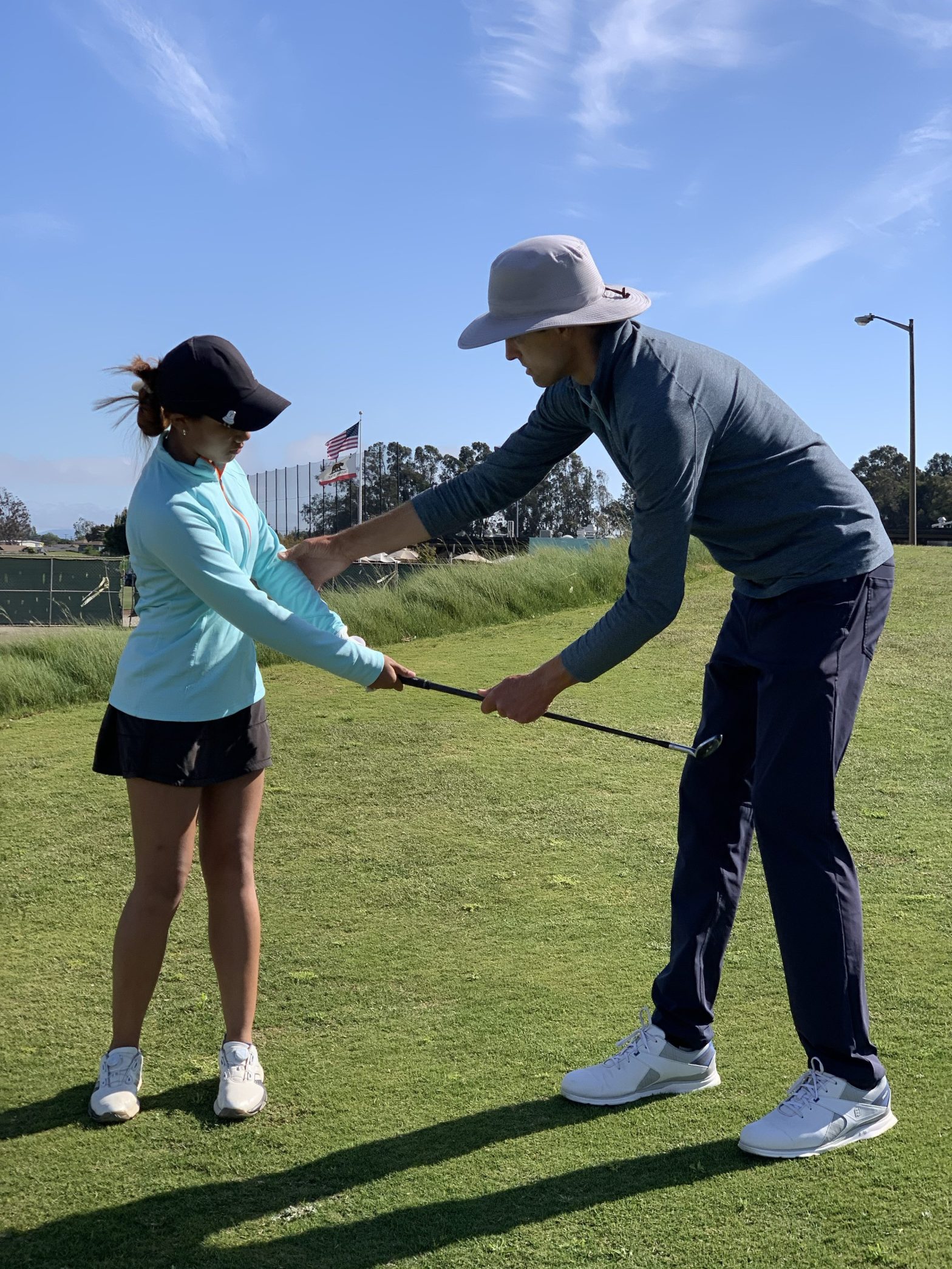
Most junior golfers do not need more random advice.
They need a plan.
Junior golf can become noisy quickly. A player has lessons, tournaments, school, practice rounds, stats, social media, rankings, college goals, swing thoughts, equipment questions, and parents trying to help. Without a clear development plan, it is easy for a junior golfer to bounce from one problem to the next without building anything that holds up under pressure.
A good plan does not make golf easy. It makes the work clearer.
The goal is to connect instruction, practice, scoring, tournament schedule, and long-term development. When those pieces work together, the player is not just “working on the swing.” They are learning how to become a better golfer.
Start with an honest assessment
Every plan should begin with the same question: where is the player right now?
That does not only mean handicap. It means tournament scoring, ball-striking patterns, short-game skill, putting, course management, mental habits, practice structure, and physical ability. It also means understanding the player’s age, goals, available practice time, and competitive schedule.
Two juniors can both average 78 and need totally different plans. One may lose shots because of driving penalties. Another may hit the ball well but three-putt too often. Another may look great on the range and then make poor decisions in tournaments.
The honest assessment prevents wasted work. It helps the player and coach choose the highest-value priority instead of chasing whatever felt bad in the most recent round.
Pick the main priority
Good junior development usually comes from doing fewer things better.
A player may have five areas that need improvement, but trying to fix all five at once rarely works. The better approach is to identify the main priority for the next block of training.
That priority might be technical. It could involve club delivery, contact, speed, face control, wedge distance control, or putting mechanics. It might also be strategic, such as learning when to aim away from trouble or how to build a tournament game plan.
The priority should be clear enough that the player can explain it. If a junior leaves a lesson with seven swing thoughts, the plan is already too crowded. The player should know what they are training, why it matters, and how success will be measured.
Separate range work from scoring work
Range practice and tournament performance are connected, but they are not the same.
Range work is where a player can build a movement, calibrate a number, or exaggerate a change. It is controlled. It allows repetition. It gives the coach and player a place to train a new pattern.
Scoring work is different. Scoring work asks, “Can you use this on the course?” That includes pre-shot routine, target selection, distance control, recovery shots, putting speed, and the ability to accept imperfect swings without unraveling the round.
A strong junior golf plan includes both. The player needs technical work, but they also need practice that looks like golf. Nine-hole games, wedge tests, putting challenges, up-and-down drills, and on-course lessons can make the work more transferable.
Build feedback into practice
Juniors improve faster when they know what they are trying to measure.
That feedback might come from technology, ball flight, start line, contact pattern, dispersion, proximity to the hole, or a simple practice score. The point is to avoid practice that is only based on how the swing feels.
Feel is important, but feel can lie. A movement that feels different is not always better. A shot that feels solid may still miss the target by the same amount. A practice session that feels busy may not create progress.
Useful feedback helps the player answer better questions:
- Did the ball start closer to the intended line?
- Did contact improve?
- Did the miss pattern tighten?
- Did wedge distances become more predictable?
- Did the player make better decisions on the course?
- Did the work show up in tournament scoring?
When a player can answer those questions, practice becomes more purposeful.
Match the tournament schedule to the development stage
Tournament experience matters, but the schedule should fit the player.
Some juniors need more local events so they can learn how to compete, post scores, and handle tournament nerves. Others need stronger regional or national events because their current tournament schedule is no longer testing them. Some need a lighter stretch to rebuild a technical priority before a heavy competition period.
The right schedule is not always the biggest schedule. It is the schedule that helps the player develop and gives an honest picture of where the game stands.
Parents can help by remembering that not every tournament is a referendum on the player’s future. Some events are for exposure. Some are for reps. Some are for confidence. Some are for learning how to handle a hard golf course.
Review and adjust
A development plan should not sit untouched for six months.
Golf changes. The player’s body changes. Tournament results create new information. A priority that mattered in March may not be the right priority in July. A junior who improves ball striking may suddenly need more wedge and putting work because the next scoring barrier has changed.
That is why the review process matters. Every few weeks, the player and coach should ask:
- What has improved?
- What is still costing shots?
- What is showing up in tournaments?
- What needs to be trained next?
- Is the practice plan realistic for the player’s schedule?
This is how a plan stays alive.
The best plan gives the player ownership
The long-term goal is not for a junior golfer to need constant instruction forever. The goal is for the player to understand their game.
They should know their tendencies. They should know what their best practice looks like. They should know how to warm up before a tournament, how to evaluate a round, and how to keep improving without panicking after one bad score.
That kind of ownership is built over time. It comes from clear coaching, honest feedback, and a plan that connects lessons to actual golf.
At Brad Marek Golf, junior development is built around that idea: better information, clearer priorities, and practice that transfers to the course.
If your junior golfer is ready for a more structured plan, visit the Private Lessons page or reach out through the Contact page to start the conversation.

